Create Time: 03 ,17 ,2025
1. The Functional Principle of Flexible Vibrating Feeders
1. Vibration Principle and Material Activation
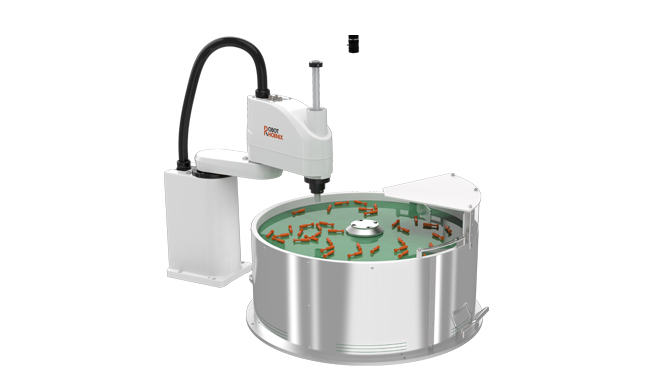
Flexible vibrating feeders generate vibrations through a voice coil motor, causing materials to move on the surface of the plate. This vibration activates the materials, making them easy to move and allowing them to travel in a specific direction, thus solving the feeding challenges caused by differences in size and shape.
2. Resonance and Coherence Wave Interference Principle
Flexible vibrating feeders use the principles of resonance and coherence wave interference to control the vibration frequency and direction of the voice coil motor, achieving directional conveying and arrangement of materials.
3. Automatic Separation and Arrangement Function
During the vibration process, materials are automatically separated and arranged based on differences in weight, shape, and size, achieving fast and accurate material distribution.
2. Intelligent Control of Flexible Vibrating Feeders
1. Visual Recognition System
Flexible vibrating feeders are equipped with a CCD visual recognition system that accurately positions small parts and transmits the data to the control system.
2. Intelligent Control System
The control system adjusts the vibration parameters (such as frequency and amplitude) of the voice coil motor based on the visual data and controls the manipulator’s actions to ensure precise material distribution and grasping.
3. Robot Collaborative Operation
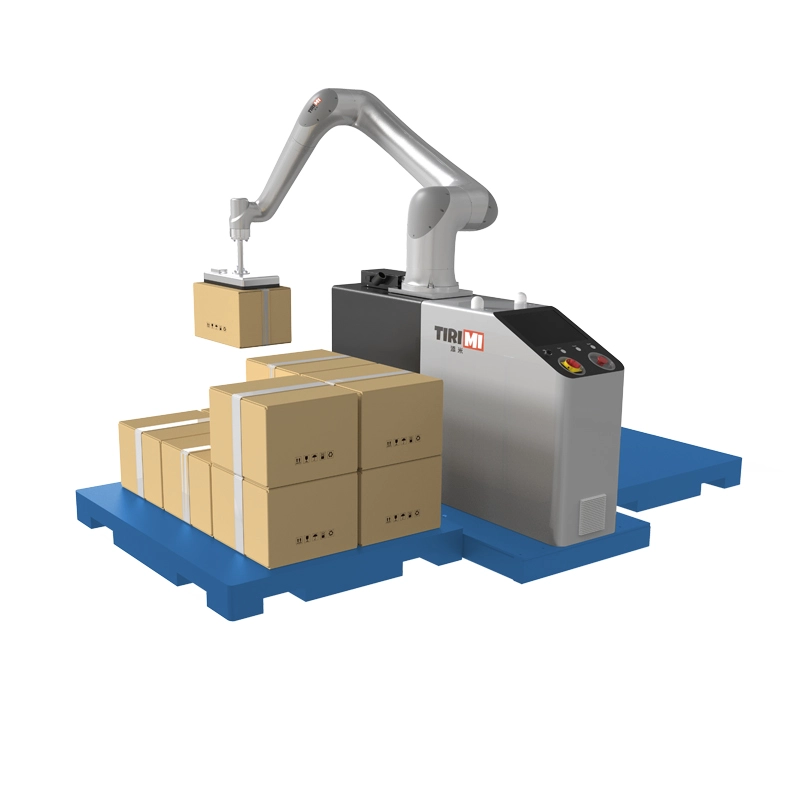
Flexible vibrating feeders work in coordination with robots. Based on the position information of the parts, the manipulator’s posture is adjusted, achieving automated, unmanned feeding. Vibration pauses during grasping to ensure stability and accuracy.
3. Application Scenarios and Effects of Flexible Vibrating Feeders
1. Extensive Application Scenarios
- Electronics Manufacturing Industry: Used for feeding, arranging, and assembling in automated production lines, enhancing efficiency.
- Food and Pharmaceutical Industries: Used for automatic feeding and sorting of pharmaceuticals or food products, ensuring hygiene and quality.
- Medical Device Industry: Used for automatic feeding and arranging of small parts such as surgical instruments and dental equipment.
2. Core Effects and Functions
- Improving Production Efficiency: Enables rapid and accurate arrangement of parts, enhancing the level of automation.
- Reducing Production Costs: Simple structure, easy to maintain, reducing labor costs.
- Enhancing Product Quality: Precise control of part positions, avoiding manual errors, ensuring product quality.


 English
  中文
中文