Introduction
In modern manufacturing, packaging efficiency, consistency and flexibility have become increasingly important. An automated packaging machine helps manufacturers perform repetitive packaging processes with less manual intervention while maintaining a more stable production flow.
Depending on its configuration, the equipment may handle product feeding, detection, sorting, picking, placing, cartoning, sealing or palletizing. It can be used as a standalone machine or integrated with upstream and downstream equipment to form a complete packaging automation system.
This article explains what an automated packaging machine is, the main equipment types, its operational benefits and the industries that commonly use automated packaging solutions.
Understanding Automated Packaging Machines
An automated packaging machine is a machine or integrated system that uses conveyors, sensors, robots, vision systems and programmable controls to complete one or more packaging processes automatically.
Its main purpose is to reduce repetitive manual handling and make the packaging process more consistent. Depending on the application, the machine may:
Detect products moving along a conveyor
Identify product position and orientation
Pick and arrange products
Place products into trays, cartons or cases
Form, close or seal cartons
Transfer finished packages to the next process
Stack completed packages onto pallets
Automated packaging equipment is used in industries such as food, pharmaceuticals, daily chemicals, electronics and automotive manufacturing. However, the appropriate machine configuration depends on product dimensions, weight, shape, packaging format and required production speed.
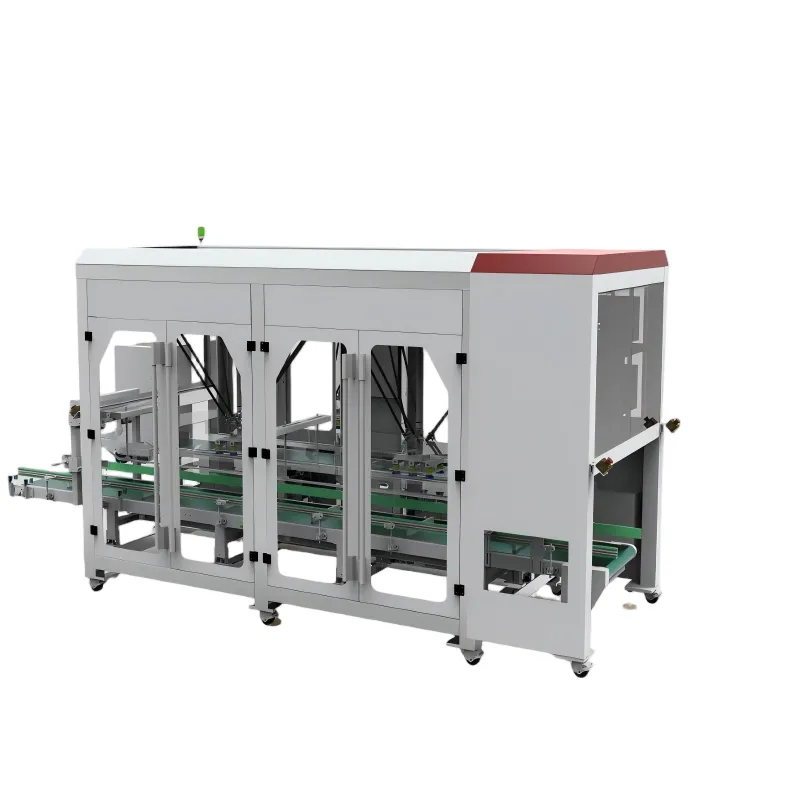
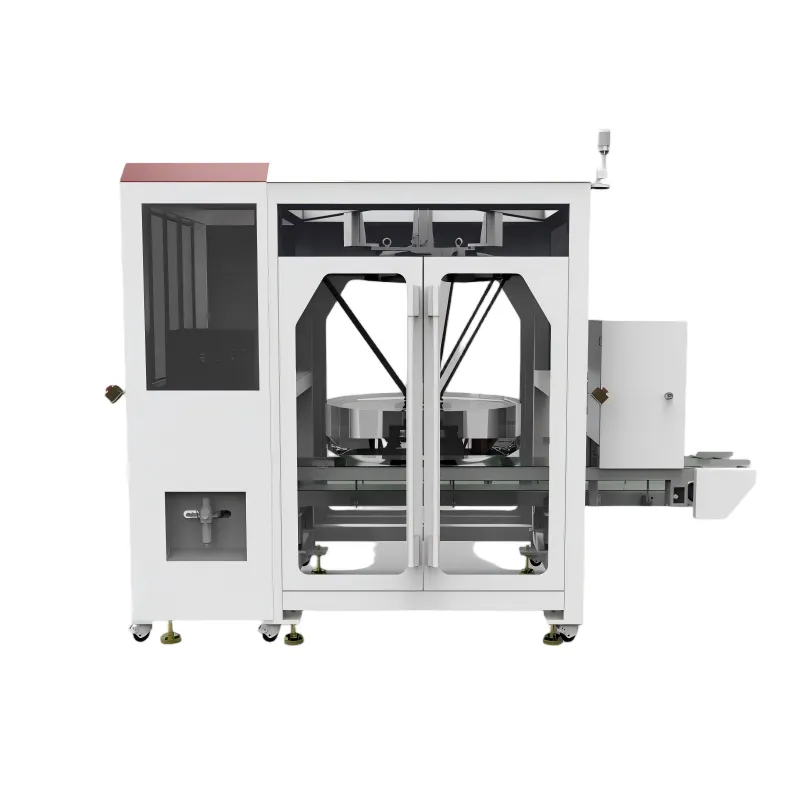
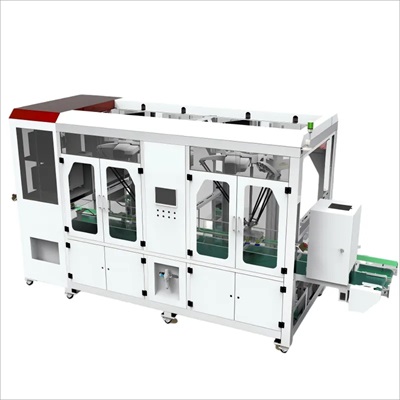
TIRIMI’s robotic packing workstations include single-robot, dual-robot and integrated packing configurations for handling bagged goods, bottles, boxes and small to medium-sized components.
Types of Automated Packaging Machines
Automated packaging machines can be classified according to the packaging process they perform.
Vertical Form-Fill-Seal Machines
Vertical form-fill-seal machines form a bag from a roll of packaging film, fill it with the product and seal the finished package. They are commonly used for snacks, powders, grains, frozen foods and other products packed in flexible bags.
Horizontal Flow Wrappers
Horizontal flow-wrapping machines feed products horizontally into packaging film before sealing the package. They are often used for products such as confectionery, baked goods, snack bars and individually wrapped items.
Robotic Packing Machines
A robotic packaging machine uses industrial robots or Delta robots to pick products and place them into trays, cartons or cases.
Vision systems may be used to locate products on a moving conveyor, while customized grippers handle products according to their size, shape and surface. Robotic packing systems can be suitable for applications that require high-speed handling, multiple packing patterns or flexible product changeovers.
Carton Erecting and Sealing Machines
Carton erectors automatically open and form flat cartons before products are loaded. Carton sealers close the completed cartons using tape, adhesive or another sealing method.
These machines can be combined with robotic packing equipment to automate several secondary-packaging processes within one production line.
Automated Feeding Systems
Before a product can be packed, it may need to be separated, oriented and supplied consistently to the packing station.
For small or irregular components, a flexible vibratory bowl feeder can work with vision inspection equipment and robotic arms to support automated product feeding, sorting and changeovers.
Palletizing Systems
Palletizing systems operate at the final stage of many packaging lines. They stack cartons, bags, containers or other completed packages onto pallets according to a defined pattern.
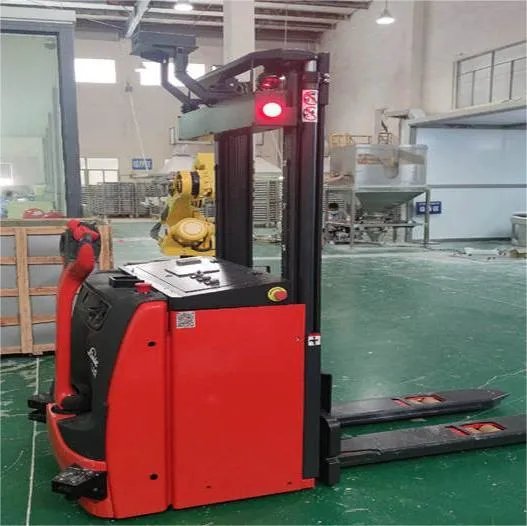
An automated palletizing workstation can be integrated into an end-of-line packaging process to reduce repetitive lifting and maintain a more consistent pallet arrangement.
Each type of automated packaging equipment serves a different purpose. Manufacturers should therefore evaluate the complete packaging process rather than selecting a machine based only on speed or purchase price.
Benefits of Using Automated Packaging Machines
The adoption of automated packaging machines can provide several operational advantages.
More Stable Production
Automated equipment follows programmed operating cycles and can maintain a more consistent production rhythm when products are supplied correctly.
The actual output depends on product characteristics, machine configuration, robot quantity, conveyor speed and packaging format. Buyers should compare stable production output rather than relying only on the theoretical maximum speed.
Improved Packing Consistency
Programmed movements and defined packing recipes help maintain consistent product counts, placement positions and packing patterns.
This can be particularly valuable for products that must be arranged neatly inside trays, cartons or retail packaging.
Reduced Repetitive Manual Handling
Automation can reduce the need for workers to perform continuous picking, placing, lifting and arranging tasks.
Operators can instead focus on machine supervision, packaging-material replenishment, product inspection, maintenance and quality control.
Greater Product Flexibility
Some automatic packaging machines can store multiple product recipes and support different packaging arrangements.
The level of flexibility depends on the difference between products. A change in product dimensions, weight or packaging format may require adjustments to the gripper, conveyor, machine tooling or control settings.
Better Line Integration
Automated machines can communicate with upstream and downstream equipment through sensors and programmable control systems.
This helps coordinate product feeding, packing, carton handling and palletizing. Proper integration can also reduce product accumulation and unnecessary production interruptions.
Long-Term Operating Value
Although automated equipment normally requires a higher initial investment than manual packing, it may provide long-term value through more stable output, reduced repetitive labor and consistent packaging quality.
The actual return on investment should be calculated using production volume, operating hours, labor requirements, maintenance costs, changeover time and expected machine utilization.
How Automated Packaging Machines Improve Efficiency
Automated packaging machines improve efficiency by coordinating several packaging processes within a controlled workflow.
For example, products may arrive from an upstream machine and move along a conveyor. A sensor or vision system detects each product, a robot picks it and the product is placed into the required package. The completed carton can then move to sealing and palletizing equipment.
This coordinated process can reduce unnecessary product transfers and repeated manual handling.
Monitoring and control systems may also provide information about:
Machine operating status
Production quantity
Product detection
Equipment alarms
Line stoppages
Product recipes
Packaging changeovers
These functions help operators identify process interruptions and make informed production adjustments.
However, an industrial packaging automation system is efficient only when its different components are properly matched. An extremely fast packing machine may still create a bottleneck if the upstream feeding system or downstream carton sealer cannot support the same output.
Before selecting equipment, manufacturers should therefore assess the complete production flow, including product feeding, conveyor layout, packaging-material supply, inspection, packing, sealing and palletizing.
Common Industries Using Automated Packaging Solutions
Automated packaging equipment is used across a wide range of industries.
Food Industry
Food manufacturers use automation for sorting, tray loading, cartoning, case packing and palletizing applications.
The equipment should be selected according to the food product, packaging format, cleaning requirements and factory hygiene procedures. Automation can reduce unnecessary product handling, but it does not replace proper food-safety controls.
Pharmaceutical Industry
Pharmaceutical and medical-product manufacturers may use automated packaging systems for bottles, boxes, medical devices, tablets and other packaged products.
These applications often require accurate product handling, inspection, traceability and documented quality controls.
Automotive Industry
Automotive manufacturers and component suppliers can use automated systems to feed, sort, inspect and pack components.
Flexible feeding and vision-guided handling can be useful when parts arrive in random orientations or when several product models must be processed on the same line.
Daily Chemical and Personal Care Industry
Bottles, jars, sachets and boxed products can be automatically arranged, packed and transferred to downstream processes.
The gripper and conveyor configuration should match the product material, container shape and risk of leakage or surface damage.
Electronics Industry
Electronic components often require precise and controlled handling. Automated systems can help orient, inspect and pack delicate parts while reducing unnecessary direct contact.
The system design should consider electrostatic-discharge controls and the specific product-protection requirements of the application.
These examples demonstrate that an automated packaging solution should be configured around the product and production process rather than applying one standard machine to every industry.
Conclusion
An automated packaging machine is equipment that uses mechanical systems, sensors, robots and programmable controls to perform packaging processes with reduced manual intervention.
Its main benefits include more stable production, consistent product placement, reduced repetitive handling, flexible operation and improved production-line coordination.
However, successful packaging automation requires more than selecting a fast machine. Manufacturers should evaluate product dimensions, packaging format, target output, changeover frequency, factory layout and upstream and downstream equipment.
TIRIMI Technology provides configurable robotic packing, flexible feeding and palletizing solutions for food, pharmaceutical, daily chemical, electronics, automotive and other industrial applications.
To receive a suitable equipment recommendation, manufacturers can provide product samples, dimensions, weight, packaging format, target speed and production-line drawings.


 English
  中文
中文