Introduction
In today’s competitive market, selecting the right packaging equipment is important for businesses seeking to improve production efficiency, packaging consistency and product quality.
Different product types, production volumes, packaging formats and customer requirements can make the equipment selection process complex. A machine that works well for one application may not be suitable for another product or production environment.
This article explains the essential considerations for assessing your packaging needs, comparing automated packaging equipment and selecting a solution that supports your current operations and future business growth.
Tirimi Technology provides industrial automation and robotic solutions that can be configured according to product characteristics, production capacity, packaging format and existing line conditions.
Assessing Your Packaging Needs Based on Product Type
Understanding your packaging requirements starts with evaluating the products that will be handled. Different products require different packaging methods, feeding systems, conveyors, robots and end-of-arm tooling.
Large or heavy products may require robust equipment with sufficient payload and structural stability. Delicate products, including pharmaceutical products, electronic components and certain foods, may require accurate positioning and controlled handling to reduce damage.
Important product information includes:
Product dimensions and weight
Shape and surface characteristics
Fragility or deformation risk
Packaging material and format
Required package arrangement
Hygiene or cleanliness requirements
Number of product varieties
Frequency of product changeovers
In the food industry, hygiene, speed and gentle product handling are often major considerations. An automatic packaging system should help maintain stable product flow while reducing direct manual contact where appropriate.
For electronics and small industrial components, accuracy and orientation can be especially important. Vision inspection, product detection and positioning controls can help reduce misplaced or incorrectly oriented components.
By carefully assessing your products and packaging requirements, you can identify the most suitable industrial packaging equipment for your operation.
Evaluating Different Packaging Equipment Options
Once you have defined your packaging needs, the next step is to compare the available equipment options.
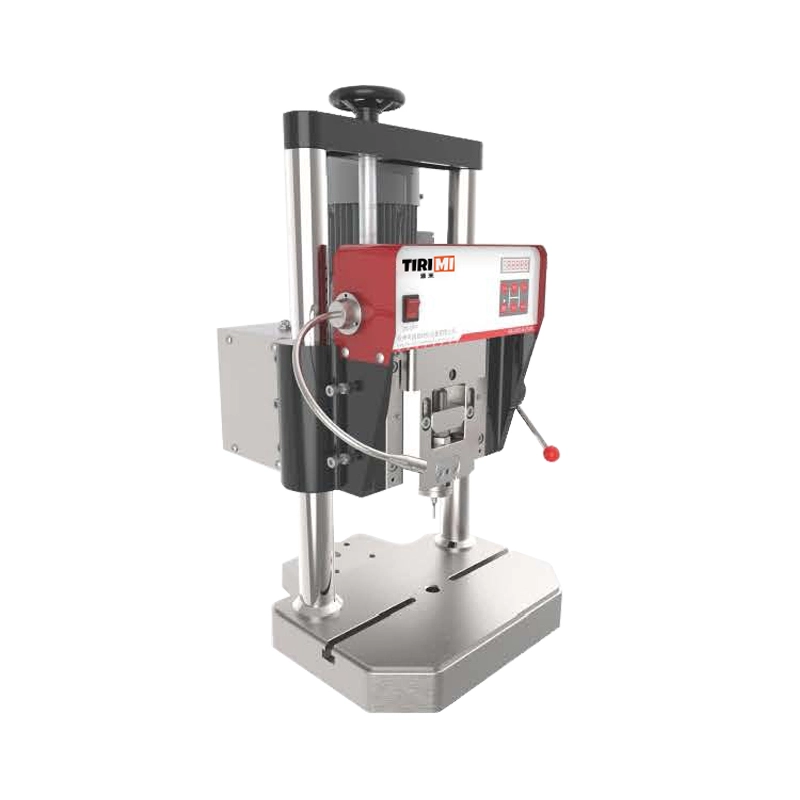
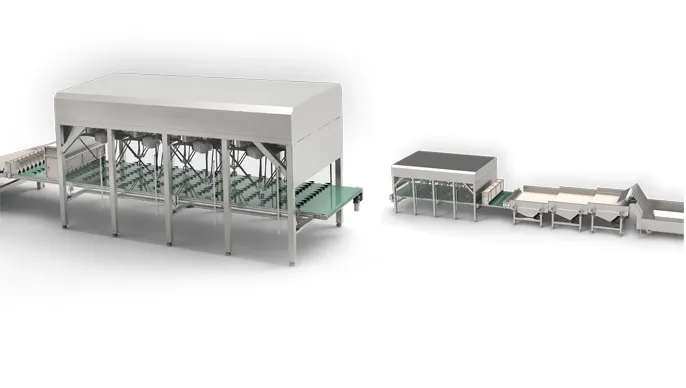
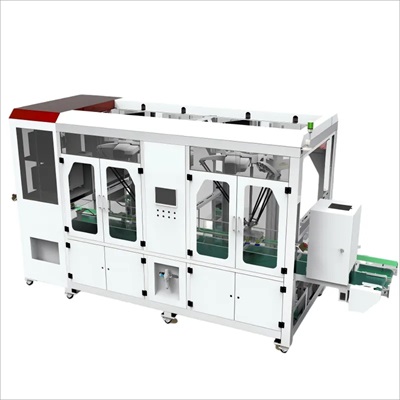
Modern packaging lines may include product feeders, conveyors, vision systems, industrial robots, packing stations, cutting equipment, case-handling machines and palletizing systems. The appropriate configuration depends on where automation is required and how each process connects with the rest of the production line.
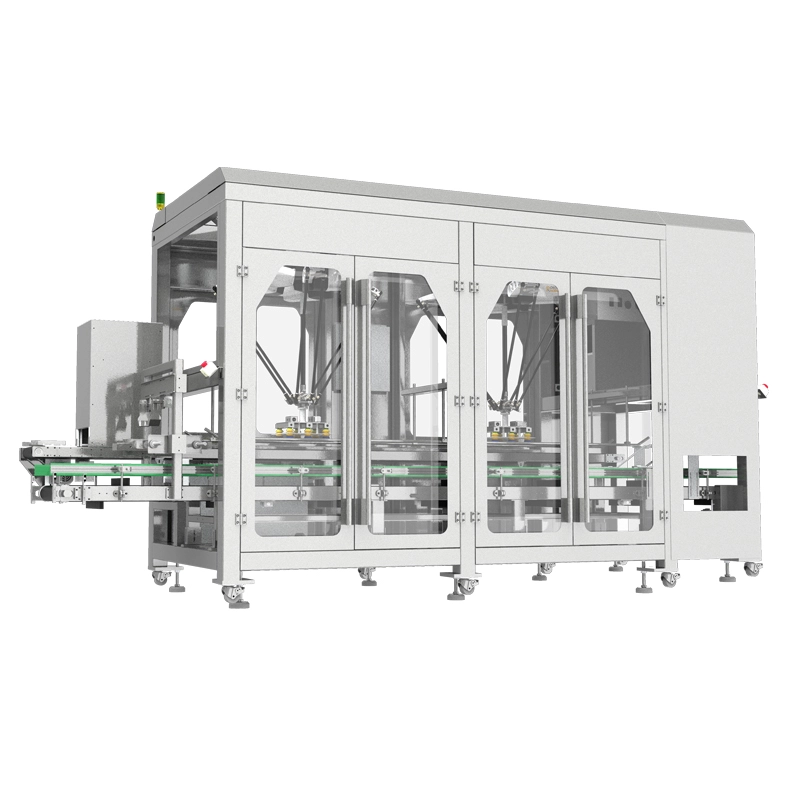
For example, robotic packing workstations can automate product picking, arranging and placement into trays, cartons or other packaging formats. Single-robot and dual-robot configurations can be selected according to the required output, product flow and available floor space.
For small components supplied in random orientations, flexible vibratory bowl feeders can be combined with vision systems and robots to separate, orient and feed products into the next process.
The main equipment evaluation factors should include:
Stable production speed
Product-handling accuracy
Compatibility with existing equipment
Changeover requirements
Cleaning and maintenance access
Operator training requirements
Equipment footprint
Safety functions
Future scalability
Technical support and spare parts
The highest-speed machine is not automatically the best option. The selected packaging automation system should deliver reliable output under actual production conditions while maintaining the required package quality.
Involving Stakeholders in the Equipment Selection Process
Selecting packaging equipment should involve the departments that will purchase, operate, maintain and manage the system.
A cross-functional equipment selection team may include representatives from:
Operators can provide practical input about product feeding, machine access, control interfaces, changeovers and daily cleaning. Maintenance teams can evaluate component accessibility, preventive maintenance requirements and spare-parts availability.
Quality personnel can review inspection points, reject handling, traceability and product-protection requirements. Finance and purchasing teams can compare investment costs, operating expenses and the expected value of the equipment.
Early stakeholder involvement helps identify potential integration and operating issues before the final purchase. It can also make operator training and the transition to a new automated packaging system smoother.
When discussing the project with an equipment supplier, provide representative product samples, packaging materials, target output, floor plans and current production-line information. More complete project data generally leads to a more accurate machine configuration.
Cost-Benefit Analysis of Different Packaging Solutions
A cost-benefit analysis should consider more than the initial equipment price.
A lower-cost machine may require more manual support, frequent adjustments or longer product changeovers. These factors can increase operating costs and reduce overall production efficiency over time.
When comparing packaging equipment for business applications, evaluate:
| Cost or Performance Factor | What to Review |
|---|
| Initial investment | Equipment, tooling, installation and commissioning |
| Production output | Stable good packages per minute or hour |
| Labor requirements | Number of operators required during normal production |
| Changeover time | Time and material needed to switch product formats |
| Maintenance | Routine servicing, wearing parts and technical support |
| Energy use | Electricity, compressed air and other utilities |
| Packaging waste | Rejected products and wasted packaging materials |
| Downtime | Frequency and duration of unplanned production stops |
| Product quality | Placement accuracy, damage rate and package consistency |
| Expansion potential | Ability to add products, robots or downstream processes |
Automation can reduce repetitive manual handling and allow employees to focus on quality control, production supervision and other higher-value tasks. However, the actual benefit depends on production volume, labor conditions, machine utilization and process stability.
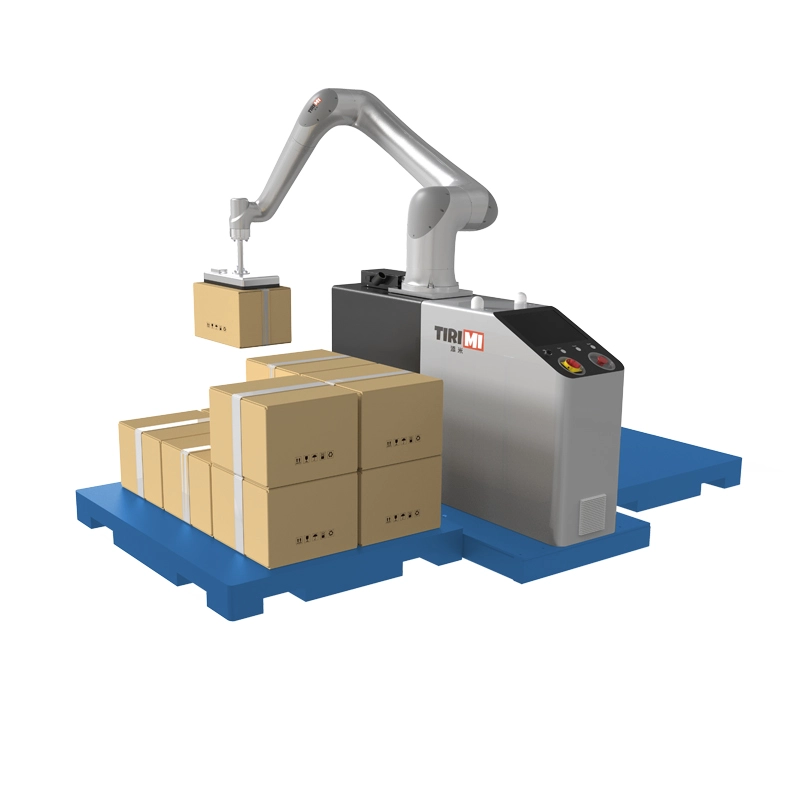
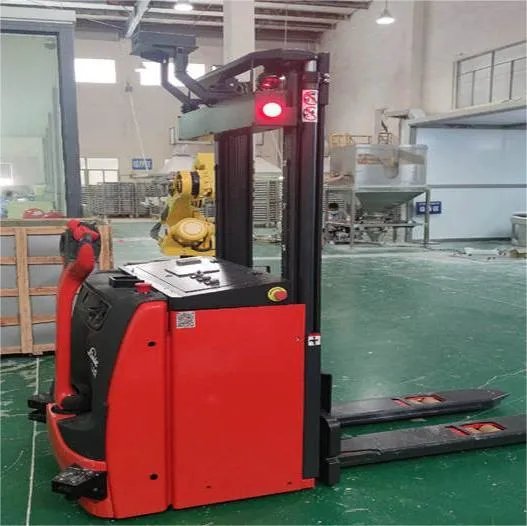
End-of-line operations should also be included in the analysis. For example, an automated palletizing workstation can reduce repetitive lifting and help maintain a consistent pallet pattern after products have been packed and sealed.
The best investment is not necessarily the equipment with the lowest purchase price. It is the solution that provides suitable performance, reliability and flexibility throughout its expected service life.
Making a Sustainable Choice in Packaging Equipment
Sustainability is becoming an increasingly important consideration in packaging and manufacturing operations.
When selecting automated packaging equipment, businesses should consider whether the machine can help reduce unnecessary material use, energy consumption, rejected products and unplanned downtime.
Relevant factors include:
Energy-efficient motors and control systems
Accurate product placement that reduces packaging errors
Compatibility with the intended packaging materials
Adjustable settings for different product formats
Efficient machine startup and shutdown
Durable components with practical maintenance access
Reduced noise and unnecessary pneumatic consumption
The ability to upgrade rather than replace the complete system
Sustainability should not be evaluated only through general environmental claims. It should be connected to measurable production factors such as energy consumption, material waste, equipment lifespan, maintenance frequency and packaging rejection rates.
A flexible and scalable machine may also support long-term sustainability because it can adapt to new products or packaging formats without requiring the entire system to be replaced.
Conclusion
Choosing the right packaging equipment does not have to be overwhelming. The process becomes more manageable when you clearly define the product, packaging format, required output, existing production flow and long-term business objectives.
A suitable solution should balance production speed, handling accuracy, flexibility, integration, operating cost, maintenance and sustainability.
Tirimi Technology provides robotic packing, flexible feeding, cutting and palletizing solutions for food, pharmaceutical, daily chemical, electronics, automotive and other industrial applications.
To receive a more accurate equipment recommendation, provide your product dimensions, weight, packaging format, target speed, factory layout and destination-market requirements. These details allow the automation system to be configured around your actual production conditions.


 English
  中文
中文