Introduction
In today’s fast-paced industrial environment, efficient packaging plays an important role in protecting product integrity, improving presentation and maintaining consistent production output. As manufacturers seek to optimize their operations, selecting the right automatic packing machine becomes an important production decision.
Different products vary in size, shape, weight, fragility, packaging format and handling requirements. Therefore, a machine that performs well for one product may not be suitable for another.
This article explores the key factors involved in choosing automated packaging equipment, including product characteristics, production capacity, packaging technology, total cost and integration with an existing production line.
Key Considerations in Automatic Packing Machine Selection
When selecting an automatic packing system, the product itself should be the starting point.
Fragile products may require gentle conveying, controlled acceleration and customized grippers to reduce damage during handling. More robust products may allow faster movement and heavier-duty equipment. Irregular, sticky or easily deformed products may require vision inspection and a specially designed feeding or picking system.
Production capacity is another important consideration. Manufacturers should determine how many units or packages must be processed per minute or per hour. The selected machine should provide sufficient capacity without creating unnecessary complexity or excessive investment.
Important product and production information includes:
Product dimensions and weight
Product shape and surface characteristics
Fragility or deformation risk
Primary and secondary packaging formats
Required production speed
Available factory space
Number of product varieties
Frequency of format changeovers
Flexibility should also be considered. As market demand changes, manufacturers may need to pack products in different sizes, quantities or arrangements. A modular packaging automation system with adjustable settings and recipe storage can support faster product changeovers.
For food and pharmaceutical applications, the machine should also meet the relevant hygiene, cleaning and product-handling requirements. Equipment design should be evaluated according to the actual application instead of relying only on general machine specifications.
Matching Packaging Technology to Different Product Types
Matching packaging technology to the product requires an understanding of both product characteristics and the intended packaging format.
Liquid products in the food, beverage, pharmaceutical and daily chemical industries often require filling, capping, sealing or bottle-handling equipment. The machine should provide controlled movement to reduce leakage, tipping and packaging damage.
Dry products can require different solutions depending on their format. Bagged snacks, confectionery, frozen foods and other packaged goods may be picked and placed into trays, cartons or cases. Small industrial components may first need to be separated, oriented and inspected before entering the packing process.
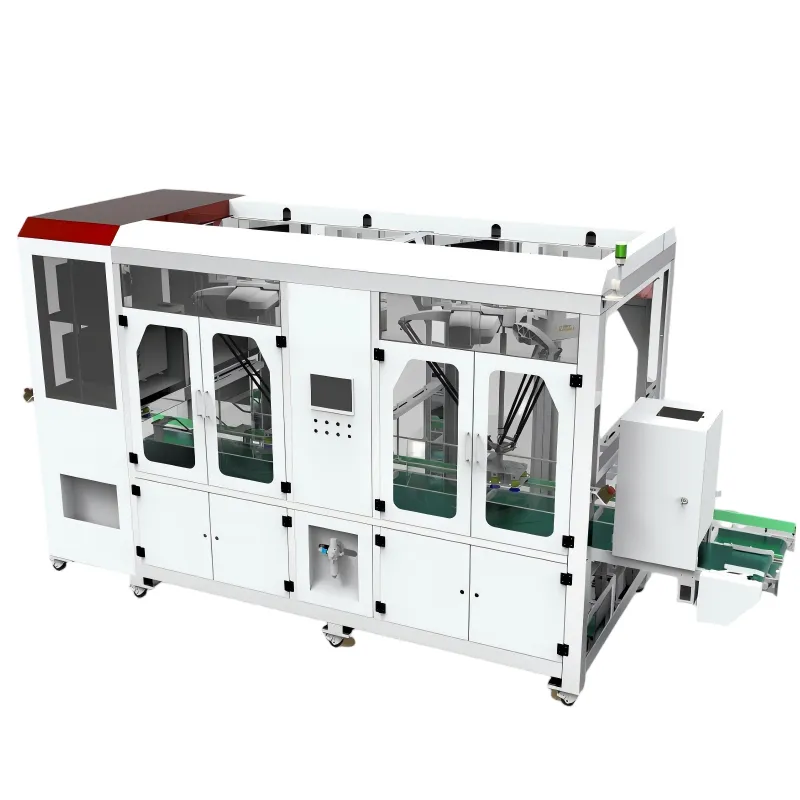
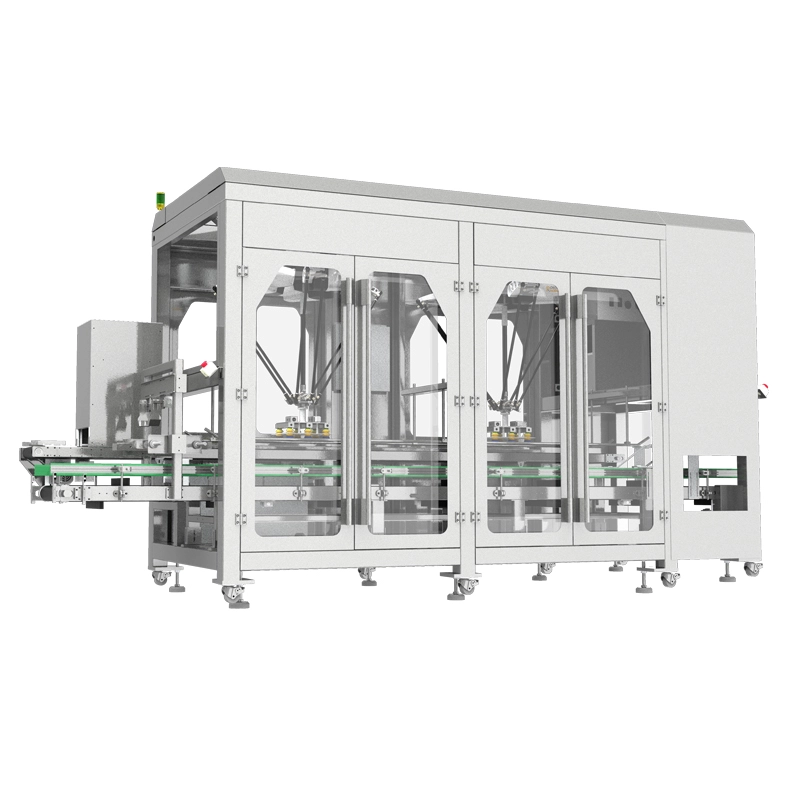
Tirimi’s robotic packing workstations can be configured for bagged goods, bottles, boxes and small or medium-sized components. The appropriate robot quantity, gripper, vision system and conveyor arrangement should be selected according to the required product flow and output.
For manufacturers in the food sector, an automatic food packing system should also consider hygienic handling, easy cleaning, packaging accuracy and the effect of handling speed on delicate products.
Matching the technology to the real product helps improve packing consistency, reduce waste and maintain stable production.
Cost vs. Performance: Making the Right Choice
Cost is an important factor when comparing automatic packing machines, but the initial purchase price should not be evaluated separately from long-term performance.
A lower-priced machine may appear attractive, but frequent downtime, complicated changeovers, higher defect rates or difficult maintenance can increase the total operating cost. In contrast, a machine with stable production, efficient changeovers and reliable support may provide greater value over its service life.
A complete cost comparison should include:
Initial equipment price
Installation and commissioning costs
Labor requirements
Energy and compressed-air consumption
Packaging-material waste
Maintenance and spare-parts costs
Product changeover time
Expected downtime
Product damage or rejection rate
Future production expansion
Manufacturers should also compare actual stable output rather than only the maximum theoretical machine speed. The most suitable industrial packaging automation solution is the one that consistently achieves the required output and package quality under normal production conditions.
Integration with Existing Production Lines
A new automatic packing machine should integrate smoothly with upstream and downstream equipment. Poor integration can cause product accumulation, inconsistent feeding, repeated line stops or unnecessary manual handling.
Before purchasing a machine, manufacturers should evaluate the complete production flow, including:
Product discharge from upstream equipment
Product spacing and orientation
Conveyor height and direction
Vision inspection requirements
Robot picking positions
Packaging-material supply
Carton erecting or sealing processes
Reject handling
Communication with existing PLC systems
Available floor space and maintenance access
For small components or products supplied in random orientations, a flexible vibratory bowl feeder can be integrated with vision systems and industrial robots to separate, orient and feed products into the next production stage.
This type of flexible feeding system can be useful when manufacturers handle several product types or require relatively frequent changeovers.
Conducting a production-line assessment before equipment selection helps ensure that the new machine works with the existing workflow rather than creating a new bottleneck.
Comparative Analysis of Common Automatic Packing Machines
Different types of automated packaging equipment are designed for different production requirements.
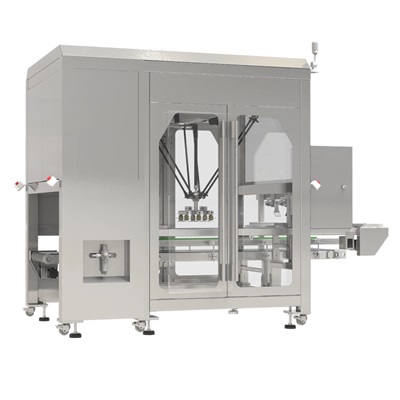
A single-robot packing station may be suitable for moderate output, limited floor space or relatively simple product handling. A dual-robot packing station can provide higher throughput or divide different packing tasks between two robots.
A packing station integrated with a case erector and carton sealer may be appropriate when manufacturers want to automate several secondary-packaging steps within one system.
Linear packing systems can be suitable for continuous product flow and straightforward production layouts. Rotary systems may support higher-speed applications but can require more space and more complex changeovers.
When comparing different machine configurations, manufacturers should evaluate:
| Selection Factor | Questions to Consider |
|---|
| Product compatibility | Can the machine handle the product’s size, weight, shape and surface? |
| Production capacity | What stable output can it achieve with the actual product? |
| Changeover flexibility | How long does it take to switch between product formats? |
| Machine footprint | Does the equipment fit the available production area? |
| Integration | Can it connect with existing conveyors, controls and packaging equipment? |
| Handling quality | Can it reduce product damage and incorrect placement? |
| Maintenance | Are important components accessible for cleaning and servicing? |
| Future expansion | Can the system support additional products or increased capacity? |
A proper comparison should therefore be based on the complete application rather than a single specification such as robot speed or machine price.
Conclusion
Selecting the right automatic packing machine is an important step in improving packaging efficiency and production consistency. The most suitable system should match the product characteristics, packaging format, required output, factory layout and long-term production plan.
Manufacturers should carefully evaluate product handling, machine flexibility, total operating cost and line-integration requirements before making a final decision.
Tirimi Technology provides configurable robotic packing, flexible feeding and production-line automation solutions for food, pharmaceutical, daily chemical, electronics, automotive and other industrial applications.
Providing product samples, packaging requirements, target speed and production-line drawings allows the equipment supplier to recommend a more accurate machine configuration for the project.


 English
  中文
中文