Introduction
In today’s fast-paced food industry, efficiency and precision are more important than ever. Automatic packing systems are becoming an essential part of food production for businesses looking to improve productivity while maintaining consistent packaging quality and suitable hygiene controls.
These systems can automate repetitive processes such as product handling, sorting, picking, placing, cartoning and end-of-line packing. Their actual performance depends on the food product, packaging format, required output and production-line configuration.
This article explores how an automatic food packing system works, its main benefits, its efficiency compared with manual packing, its role in reducing packing errors and several common applications in the food industry.
What Is an Automatic Packing System?
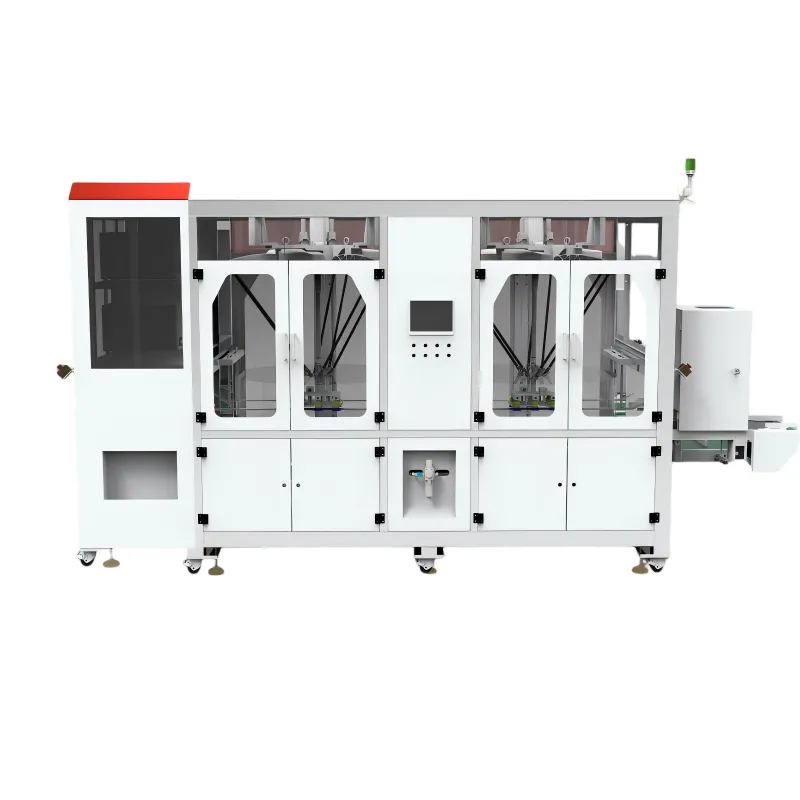
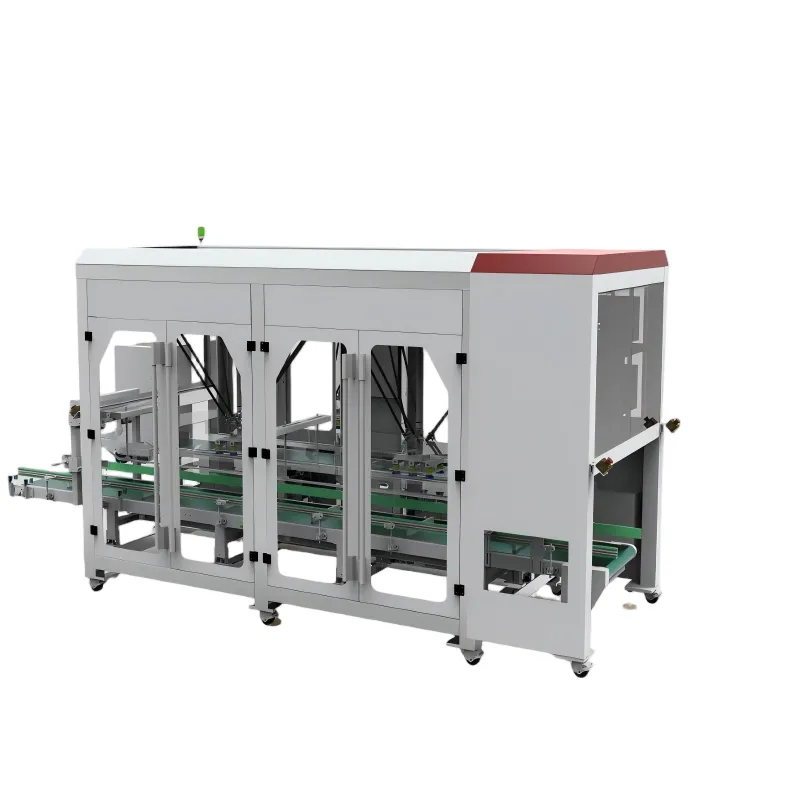
An automatic packing system refers to a combination of machines and control technologies designed to package products with reduced manual intervention. Depending on the application, the system may include conveyors, industrial robots, vision systems, product feeders, carton-handling equipment and sealing machines.
These components work together to complete processes such as detecting products, picking and arranging them, placing them into trays or cartons and transferring completed packages to the next production stage.
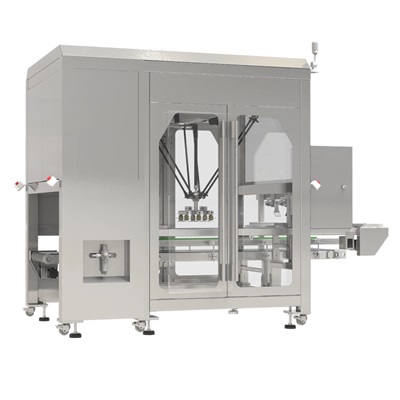
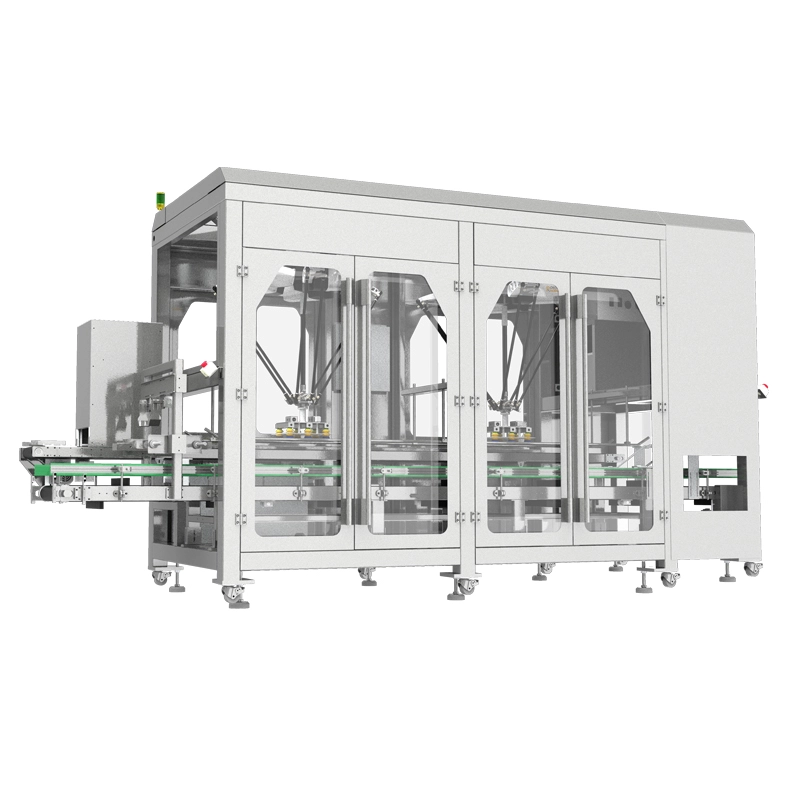
For example, a robotic packing workstation can use Delta robots and vision tracking to identify products moving on a conveyor and place them into boxes or trays according to a defined packing pattern.
Compared with manual packing, automated equipment can maintain a more stable production cycle and reduce dependence on repetitive manual handling. It can also help manufacturers improve product placement consistency and make better use of available labor.
However, the actual benefits of food packaging automation vary according to product characteristics, packing speed, robot quantity, gripper design and the coordination between upstream and downstream equipment.
Key Benefits of Using Automatic Packing Systems
The use of automatic packing systems in the food industry can provide several important benefits.
Increased Efficiency
Automated systems can perform repetitive packing tasks continuously at a controlled speed. When products are supplied consistently, the system can help maintain stable throughput across production shifts.
Unlike manual packing, automated operation is less affected by operator fatigue. This makes it particularly suitable for high-volume food production and repetitive pick-and-place applications.
Consistency and Precision
An automatic system follows programmed movements, product recipes and defined packing patterns. This can help ensure that products are counted, positioned and arranged more consistently within trays, cartons or other packaging.
Consistent packing can also improve package presentation and reduce differences between production shifts.
Reduced Manual Handling
Automation can reduce the amount of direct handling required during repetitive packing processes. Employees can instead focus on product inspection, packaging-material replenishment, equipment supervision and quality control.
Reducing unnecessary product contact may also support the factory’s broader hygiene-management procedures, particularly when the equipment is designed for the relevant food production environment.
Lower Risk of Packing Errors
Sensors and vision systems can help identify product position, orientation and presence before picking. This can reduce errors such as missing products, incorrect product counts, poor alignment and inconsistent placement.
The level of inspection depends on the selected vision and control configuration, so manufacturers should clearly define which defects or conditions the system needs to detect.
Long-Term Operating Value
Although the initial investment in automated packing equipment can be higher than a manual packing process, automation may provide long-term value through stable production, reduced repetitive labor and more consistent package quality.
The actual return on investment should be evaluated using production volume, labor requirements, operating hours, maintenance costs, product changeover time and expected machine utilization.
Comparative Efficiency: Manual vs. Automatic Packing
Manual packing is still suitable for some low-volume operations, highly variable products and applications requiring frequent changes. It generally requires a lower initial investment and can offer flexibility for simple packing tasks.
However, manual packing can become less consistent as production volume increases. Repetitive work may cause fatigue, and output can vary according to operator experience and staffing conditions.
In contrast, an automatic food packing machine performs tasks according to programmed settings. When products enter the system with consistent spacing and orientation, the equipment can maintain a stable operating cycle.
| Comparison Area | Manual Packing | Automatic Packing |
|---|
| Production output | Depends on operator speed and availability | More stable under consistent production conditions |
| Packing consistency | May vary between operators and shifts | Uses repeatable programmed movements |
| Labor requirements | Requires continuous manual handling | Mainly requires supervision and material replenishment |
| Product changes | Flexible for simple products | Depends on recipes, tooling and gripper changes |
| Initial investment | Generally lower | Generally higher |
| Expansion | Usually requires additional operators | May support additional robots or automation modules |
Automatic packing is not necessarily the best option for every production line. Businesses should evaluate the required output, product range, labor availability, available space and expected operating period before deciding whether automation is suitable.
Reducing Errors and Enhancing Food Safety
Food safety is an important consideration in food production and packaging. TIRIMI provides robotic automation solutions for the food industry, including product handling, sorting, packing and palletizing applications.
A properly configured automated system can reduce packing errors associated with repetitive manual processes. Sensors, vision cameras and control systems may be used to monitor product presence and position before products are placed into their packaging.
Automation can help reduce issues such as:
Missing products inside a package
Incorrect product counts
Products placed in the wrong direction
Uneven product arrangements
Damage caused by inconsistent handling
Delays caused by unstable manual feeding
Reducing direct product contact may support hygiene management, but an automated system does not guarantee food safety by itself. Manufacturers must also consider equipment cleanability, food-contact materials, factory sanitation procedures and the applicable regulatory requirements.
The machine design should therefore be evaluated according to the specific food product and production environment.
Case Studies: Typical Applications in the Food Industry
Different food manufacturers can use automatic packing systems to solve different production challenges.
A snack or confectionery manufacturer may use Delta robots to pick packaged products from a moving conveyor and arrange them inside cartons. Vision tracking helps identify the position of each product, while customized grippers support stable handling.
For frozen foods or ready meals, automation can be used to transfer products into trays or secondary packaging. The system should be designed according to the product temperature, package dimensions and required cleaning conditions.
Beverage, bottled food and jarred-product manufacturers may use automation to group containers and load them into cases. Once the cartons have been packed and sealed, an automatic palletizing system can stack them onto pallets for storage or transportation.
Fresh produce and baked foods may require more careful handling because products can vary in shape or may be easily damaged. In these applications, the gripper, picking speed and motion path should be tested using actual product samples.
These examples show that successful food packing automation depends on matching the equipment configuration to the product, package and production process rather than applying the same solution to every food line.
Conclusion
The advantages of automatic packing systems in the food industry include more stable production, consistent product placement, reduced repetitive handling, fewer packing errors and improved flexibility.
However, the results depend on selecting a system that matches the product size, shape, packaging format, target speed and existing production line.
TIRIMI Technology provides configurable robotic packing and end-of-line automation solutions for snacks, confectionery, frozen foods, ready meals, bottled products and other food applications.
Manufacturers can provide product samples, package dimensions, target output and production-line drawings to receive a more suitable system recommendation based on their actual operating requirements.


 English
  中文
中文